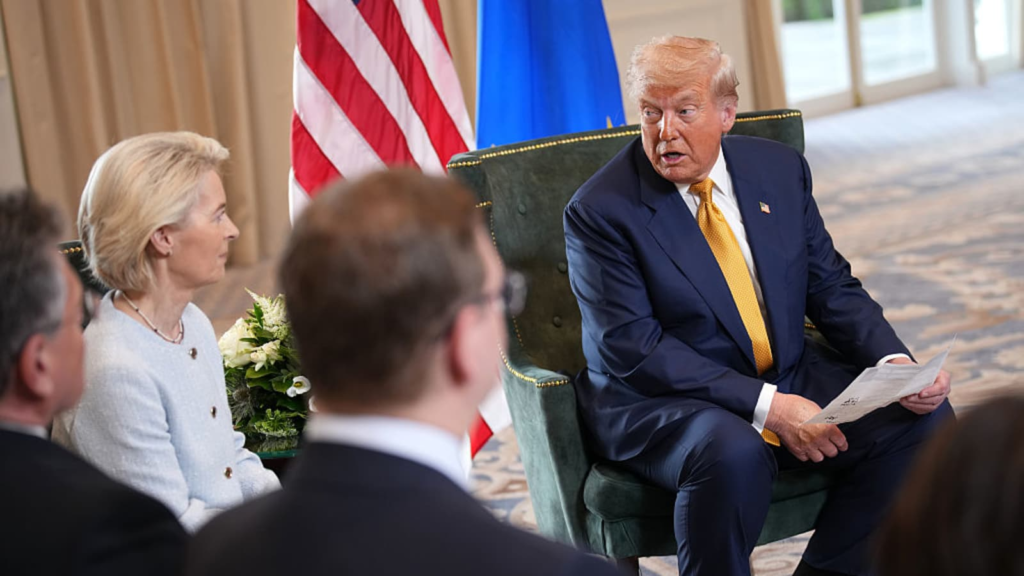

Washington, D.C. — U.S. President Donald Trump has threatened to impose what he described as as trade tensions between Washington and Brussels continue to escalate, Trump claimed that the EU has been “robbing” major U.S. technology firms by imposing regulations and financial penalties that disproportionately affect American businesses. He argued that the measures “substantial tariffs” on imports from the European Union, accusing the bloc of unfairly targeting American technology companies through its digital regulations and tax policies.
Speaking as trade tensions between Washington and Brussels continue to escalate, Trump claimed that the EU has been “robbing” major U.S. technology firms by imposing regulations and financial penalties that disproportionately affect American businesses. He argued that the measures amount to unfair trade practices and warned that the United States is prepared to respond with stronger economic action.
The remarks come as European regulators intensify enforcement of landmark digital legislation, including the Digital Services Act and the Digital Markets Act. These laws are designed to increase competition, improve online safety, and hold large technology platforms accountable for their business practices. Several U.S.-based tech companies have been the focus of investigations and regulatory actions under the new framework.
Trump said his administration would consider imposing higher tariffs on selected European goods if the EU continues policies that he believes discriminate against American companies. While he did not specify which products could be affected, the threat raises the prospect of renewed transatlantic trade friction.
European officials have consistently rejected accusations that their digital regulations unfairly target U.S. firms. They maintain that the rules apply equally to all large online platforms operating within the European Union, regardless of where the companies are headquartered. EU leaders argue the legislation is intended to protect consumers, promote fair competition, and strengthen digital security across the bloc.
Trade analysts caution that any new tariffs could trigger retaliatory measures from the European Union, potentially affecting industries ranging from manufacturing and agriculture to consumer goods. Previous tariff disputes between the two economic powers have led to billions of dollars in duties on products traded across the Atlantic.
The latest exchange highlights growing tensions over how governments should regulate global technology companies. As the United States and the European Union pursue different approaches to digital governance, disputes over competition policy, online content rules, privacy protections, and taxation are increasingly becoming central issues in broader trade negotiations.
Observers say the outcome of the dispute could have significant implications for multinational technology firms, international commerce, and the future of digital regulation. Whether the disagreement leads to negotiated solutions or a fresh round of tariffs will likely depend on upcoming diplomatic and trade discussions between Washington and Brussels.